Welcome to our blog
Dive into the world of Discovery Kids Developmental Services. Here, we share insights, stories, and helpful information for parents and educators. Learn about our Reggio Emilia-inspired program and how we honor play as the heart of learning. Join us as we explore the wonders of childhood development and neurodiversity.
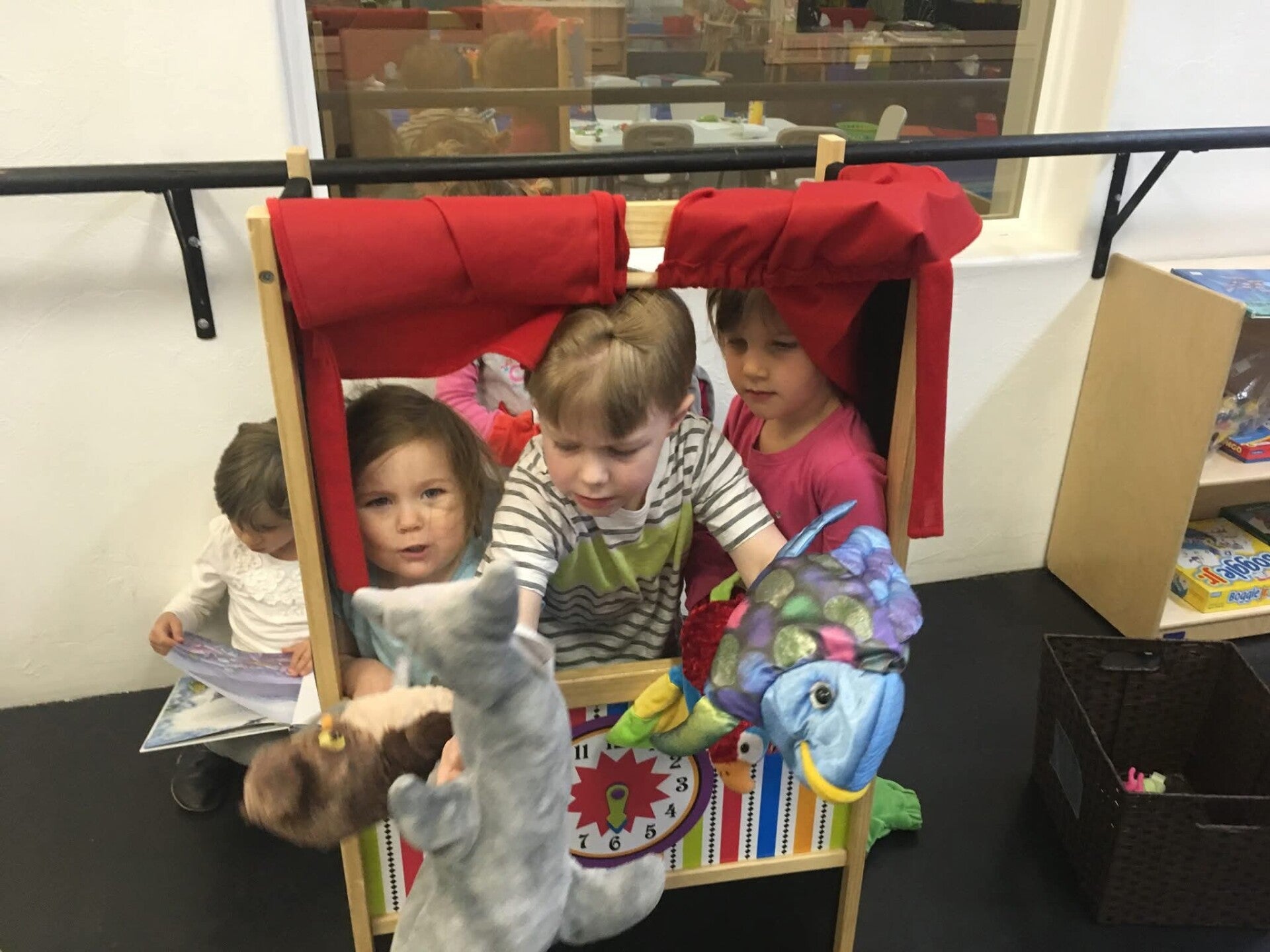
Why Play is the Foundation of Learning: Research Supporting Developmentally Appropriate, Play-Based Education
At Discovery Kids Developmental Services, we believe in the power of child-led play. Our Reggio Emilia–inspired program is grounded in the understanding that play is a child’s work—the primary way young children explore ideas, express emotions, build relationships, and make sense of the world around them. Rather than viewing play as a break from learning, we honor it as the heart of learning. This belief is not only philosophical; it is strongly supported by decades of research in child development, neuroscience, and education.
The Science Behind Play-Based Learning
Developmentally appropriate, play-based education aligns with how young brains are designed to grow. Research in neuroscience shows that early childhood is a period of rapid brain development, during which neural connections (synapses) are formed at an extraordinary rate. Experiences that are meaningful, hands-on, and emotionally engaging—such as imaginative play, sensory exploration, and social interaction—strengthen these neural pathways far more effectively than rote instruction.
A landmark study by the National Institute for Play and researchers such as Dr. Stuart Brown highlights that play is essential for healthy brain development, particularly in areas responsible for emotional regulation, problem-solving, and social skills. Similarly, research from Harvard University’s Center on the Developing Child emphasizes that play promotes executive function skills, including working memory, cognitive flexibility, and impulse control—skills that are stronger predictors of lifelong success than early academic achievement alone.
Play and Long-Term Academic Success
Contrary to the belief that early academic instruction leads to better outcomes, research consistently shows that play-based learning in early childhood supports stronger long-term academic performance. A well-known longitudinal study by the Alliance for Childhood found that children in play-based preschool programs demonstrated equal or higher academic achievement in later grades compared to peers who experienced academically rigid early education. More importantly, these children showed higher creativity, motivation, and enthusiasm for learning.
The American Academy of Pediatrics also affirms that play-based learning fosters language development and early literacy. Through storytelling, pretend play, and conversation during play, children naturally build vocabulary, narrative skills, and comprehension—often at a deeper level than through worksheets or direct instruction.
Social-Emotional Development Through Play
Social-emotional engagement is a cornerstone of developmentally appropriate education. Research by Dr. Adele Diamond and others demonstrates that unstructured, collaborative play helps children develop self-regulation, empathy, cooperation, and resilience. During play, children practice negotiating roles, resolving conflicts, managing frustration, and understanding others’ perspectives—all within a safe and supportive environment.
The hierarchy of needs further reinforces the importance of play-based learning. Children must feel physically and emotionally safe, connected, and valued before their brains are ready to absorb academic content. Play naturally supports this sense of safety and belonging, allowing children to learn at their own pace while feeling confident and capable.
Child-Led Play and Intrinsic Motivation
When learning is child-led, children become active participants rather than passive recipients of information. Research by psychologist Edward Deci on intrinsic motivation shows that children learn more deeply and retain information longer when they feel autonomy, competence, and connection—conditions that are naturally present in play-based environments.
In Reggio Emilia–inspired settings, educators observe children’s interests and thoughtfully design environments that extend their curiosity. Open-ended materials, loose parts, and meaningful provocations invite children to investigate, experiment, and express ideas using many “languages,” including art, movement, construction, and storytelling. This approach respects children as capable learners and honors the individuality of each child.
Preparing Children for Life, Not Just School
The goal of early childhood education is not simply early academics, but the development of the whole child. Research from the World Economic Forum identifies skills such as creativity, collaboration, adaptability, and emotional intelligence as essential for future success—skills that are best nurtured through play.
By engaging in developmentally appropriate, play-based learning, children build a strong foundation for lifelong learning. They develop confidence in their abilities, curiosity about the world, and trust in their own thinking. These qualities cannot be rushed, but they can be intentionally supported through thoughtfully designed play environments.
Our Commitment
At Discovery Kids Developmental Services, we are committed to creating a nurturing, research-informed environment where learning is joyful, meaningful, and deeply connected to each child’s unique voice. By honoring play as a child’s work and grounding our practices in well-established research, we support children not only in developing academic readiness, but in becoming confident, compassionate, and capable human beings.

The Environment as the Third Teacher
In the Reggio Emilia philosophy, the environment is regarded as the third teacher, working alongside children and educators to shape learning. Thoughtfully designed spaces communicate values, provoke curiosity, and support children’s innate drive to explore and make meaning. Rather than serving as a backdrop, the environment is intentional and responsive—arranged to invite investigation, collaboration, reflection, and joy. Light, color, texture, and access to natural materials are carefully considered, creating spaces that feel calm, beautiful, and worthy of children’s ideas. When children enter such an environment, they receive a clear message: your thinking matters here.
Within this framework, children are offered rich opportunities for creative expression, sensory enrichment, naturalistic exploration, and social-emotional engagement. Open-ended materials, art media, loose parts, and elements from the natural world are deliberately chosen to spark inquiry rather than prescribe outcomes. These materials encourage children to hypothesize, experiment, problem-solve, and revisit ideas over time. Toys are not used to direct learning, but to function as one of the many “languages” children use to communicate their thinking—alongside movement, art, storytelling, construction, music, and imaginative play. Through these varied languages, children make their ideas visible, negotiate meaning with peers, and construct a deeper understanding of themselves and the world around them.
As children interact with the environment, educators observe closely, listening for emerging questions and theories. The space evolves in response to these observations, with materials added, removed, or rearranged to extend learning and honor children’s interests. In this way, the environment becomes a living, dynamic teacher—one that supports autonomy, fosters relationships, and nurtures a strong sense of belonging. Rooted in the Reggio Emilia philosophy, this approach recognizes that when the environment is intentionally designed and deeply respected, it becomes a powerful partner in children’s learning and development.
At Discovery Kids Playschool children are offered rich opportunities for creative expression, sensory enrichment, naturalistic exploration, and social-emotional engagement. Open-ended materials, art media, loose parts, and natural elements invite children to investigate, experiment, and problem-solve in ways that are meaningful to them. The environment is intentionally set up in ways that promote movement, art, storytelling, construction, and imaginative play. These "languages" allow children make their ideas visible and deepen their understanding.
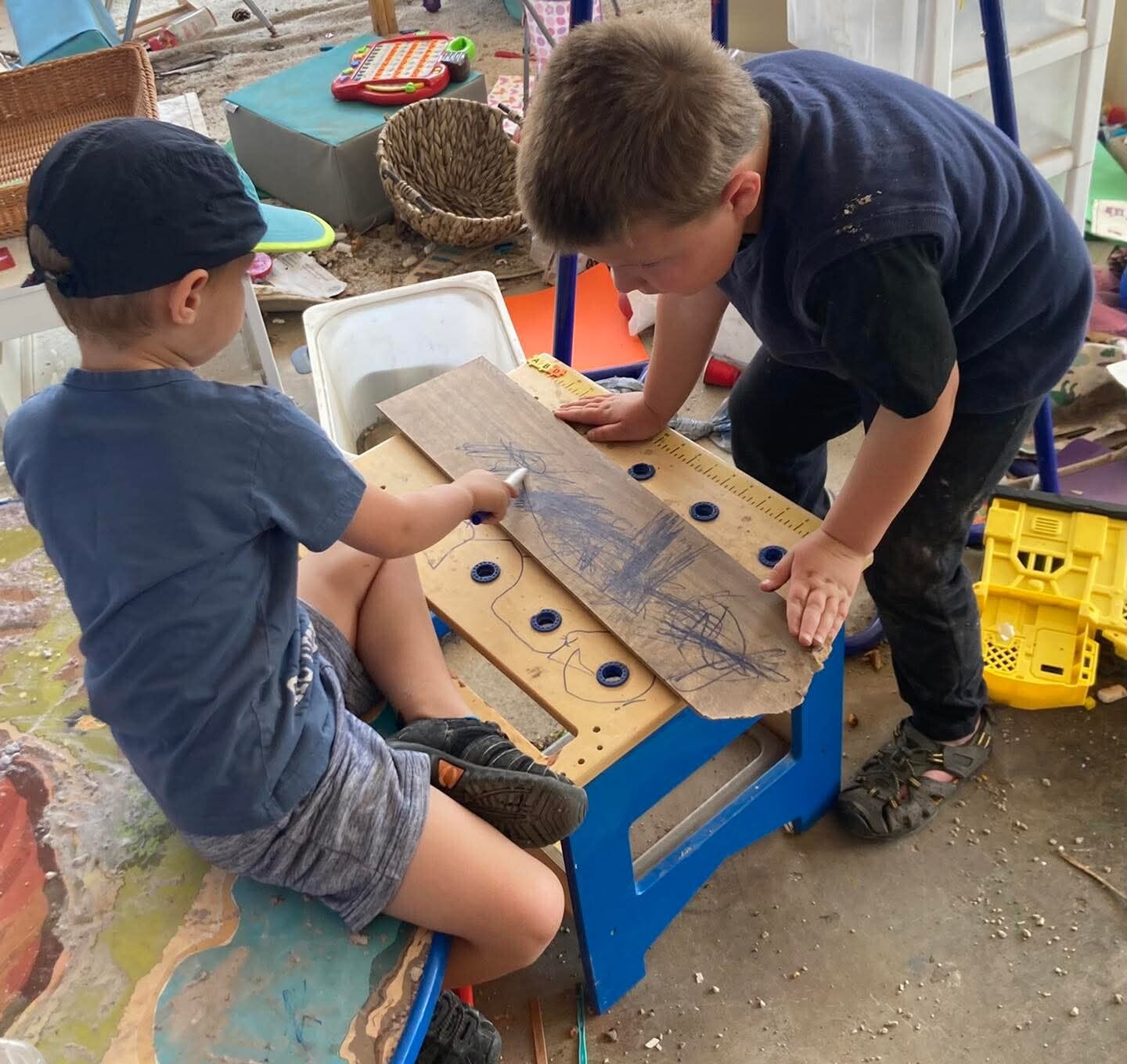
Play Is a Child’s Work: Why Child-Led Learning Matters
In early childhood, play is not a break from learning—it is learning. Through play, children make sense of their world, test ideas, build relationships, and develop the foundations for lifelong learning. When we view play as a child’s work, we honor the deep cognitive, emotional, and social processes happening beneath the surface of seemingly simple moments.
Learning in our program is child-led and curiosity-driven. Educators carefully observe children’s interests, questions, and emerging theories about the world. Rather than directing learning or imposing predetermined outcomes, teachers design environments and experiences that extend children’s ideas. This responsive approach ensures that learning feels meaningful and relevant to each child, because it grows directly from their natural curiosity.
Children Learn Best When They Are Intrinsically Motivated
When children are given the freedom to explore topics that genuinely interest them, motivation comes from within. Intrinsic motivation fosters persistence, creativity, and problem-solving—skills that cannot be taught through worksheets or rote instruction. A child deeply engaged in building a tower, role-playing a story, or experimenting with water is developing focus, planning skills, and flexible thinking.
Child-led learning also nurtures confidence. When children see their ideas taken seriously and their questions valued, they begin to trust themselves as learners. They develop a strong sense of agency—the belief that their actions, thoughts, and choices matter. This sense of ownership over learning lays the groundwork for resilience and a lifelong love of discovery.
Play Supports Whole-Child Development
Through play, children engage their whole bodies and brains. Social-emotional skills such as empathy, cooperation, emotional regulation, and communication are practiced naturally as children negotiate roles, solve conflicts, and collaborate with peers. These experiences are essential, not optional. Research consistently shows that children must feel emotionally safe and connected before they can engage in higher-level thinking and academic learning.
Play also supports cognitive development. When children experiment, ask “what if,” and test hypotheses during play, they are engaging in early scientific thinking. When they tell stories, draw, build, and move, they are using many “languages” to express understanding—verbal, visual, kinesthetic, and symbolic. Each of these forms of expression strengthens neural connections and supports brain development in ways that traditional instruction cannot replicate.
Educators as Partners in Learning
In a play-based, child-centered environment, educators are not passive observers. They are thoughtful partners in learning. Teachers listen closely, document children’s thinking, and intentionally design spaces rich with materials that invite exploration. They ask open-ended questions, introduce new possibilities, and scaffold learning without taking control away from the child.
This balance of freedom and guidance allows children to stretch their thinking while remaining rooted in joy and curiosity. Learning becomes a collaborative process—one built on trust, respect, and relationships.
Honoring Each Child’s Unique Voice
Every child arrives with their own strengths, interests, and ways of understanding the world. When play is honored as a child’s work, there is room for all learners to thrive. Children are trusted as capable thinkers, collaborators, and problem-solvers. Differences are seen as assets, and learning unfolds at a developmentally appropriate pace.
By valuing children’s many ways of knowing and expressing themselves, we create a nurturing environment where learning is joyful, meaningful, and deeply connected to each child’s identity. In this space, children don’t just acquire information—they build confidence, curiosity, and a sense of belonging.
A Strong Foundation for Life-Long Learners
Play-based, child-led learning is not about doing less—it is about doing what matters most. When children are given time, space, and trust to play, they develop the skills they need not only for school, but for life. They learn how to think, how to relate to others, and how to understand themselves.
When we honor play as a child’s work, we send a powerful message: children are capable, learning is joyful, and curiosity is worth protecting.

The Value of Light Play
What Is Light Play?
Light play involves exploring materials such as flashlights, mirrors, translucent objects, light tables, and shadow props. These activities encourage children to experiment with brightness, color, and shadow in hands-on, playful ways.
Why Light Play Matters
Light play supports learning across many developmental areas:
Cognitive Growth
- Children learn about cause and effect (“What happens if I block the light?”).
- They explore early science concepts like reflection, shadows, and color mixing.
Creativity & Imagination
- Light naturally draws children into creative exploration.
- They use color, shape, and shadow to create patterns, scenes, and stories.
Language Development
- Light play inspires conversation and new vocabulary such as “transparent,” “bright,” and “shadow.”
- Children describe what they notice and share ideas with peers.
Math & Spatial Skills
- Light tables highlight shapes, patterns, size differences, and symmetry.
- Children sort, stack, compare, and build using illuminated materials.
Social-Emotional Benefits
- Light play encourages cooperation and shared discovery.
- The calming glow of light can help children regulate and focus.
Inclusive Learning
- Light-based activities are highly engaging and accessible for diverse learning styles, including neurodivergent children.
- High contrast and visual clarity support children who benefit from sensory-rich learning.
How Parents Can Support Light Play at Home
Try simple, safe light exploration: flashlights under blankets, shadow puppets on the wall, or translucent toys near a sunny window.
Light play invites children to explore, imagine, and discover—building a strong foundation for creativity, curiosity, and early learning.
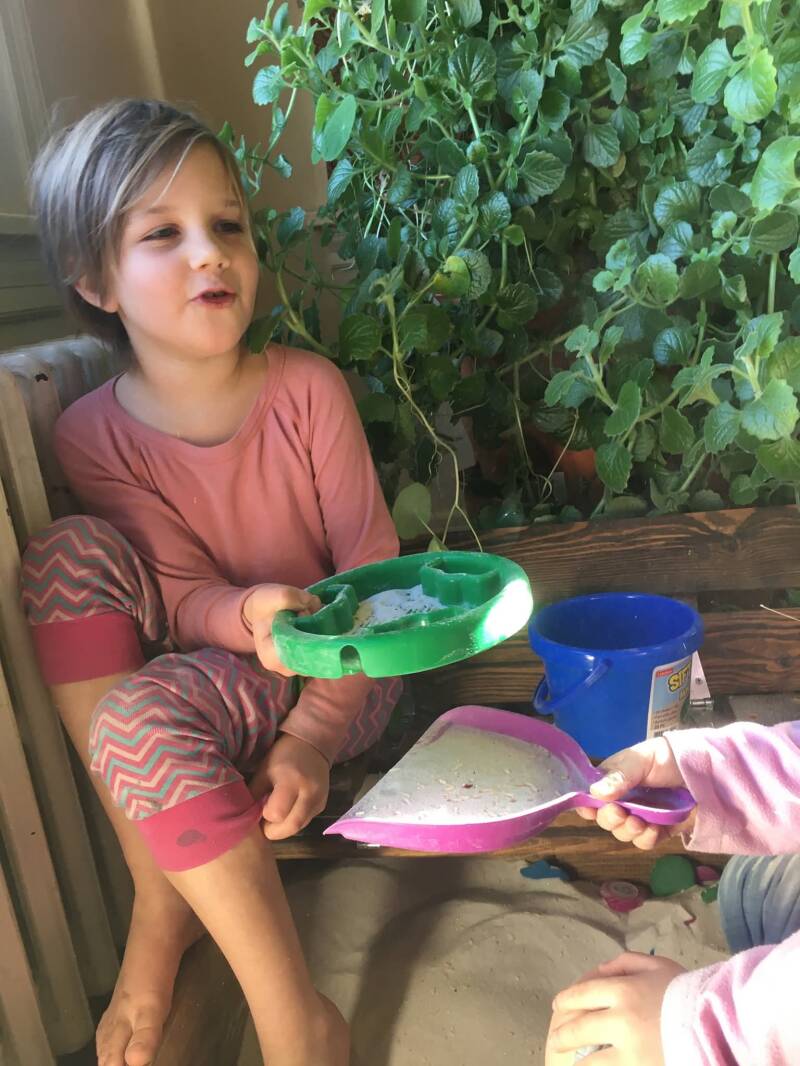
Hygee in the Early Years
Hygge (pronounced HOO-guh) is a Scandinavian concept—most closely associated with Denmark—that centers on a feeling of coziness, comfort, safety, and well-being created through simple, meaningful experiences. Rather than being a single practice, hygge is a way of living that values calm, connection, warmth, and presence over rush, excess, or performance.
What Is Hygge?
Hygge emphasizes:
A warm, inviting environment (soft lighting, natural materials, gentle colors)
Slow, unrushed rhythms of the day
A strong sense of belonging and togetherness
Finding joy in simple moments—shared meals, storytelling, quiet play, time outdoors
Emotional comfort alongside physical comfort
In Scandinavian cultures, hygge is intentionally woven into daily life, especially during early childhood, as a protective buffer against stress and overstimulation.
Why Hygge Is Significant in Early Childhood
Hygge aligns beautifully with what research tells us about how young children learn and develop:
1. Emotional Safety Supports Brain Development
Children learn best when they feel emotionally and physically safe. Hygge environments reduce stress and cortisol levels, allowing the brain to focus on exploration, problem-solving, and relationship-building. A calm, predictable atmosphere supports regulation and resilience—foundations for all future learning.
2. Connection Comes Before Academics
Hygge prioritizes relationships over outcomes. Warm interactions, shared routines, and unhurried time together strengthen attachment and trust. When children feel deeply connected to caregivers and peers, they are more confident taking risks, expressing themselves, and engaging socially.
3. Gentle Sensory Experiences
Instead of overstimulating environments, hygge embraces soft textures, natural light, quiet sounds, and cozy spaces. These gentle sensory inputs help children remain regulated and attentive, particularly benefiting young children who are still developing sensory integration skills.
4. Supports Social-Emotional Learning
Through shared moments—snack time, group storytelling, collaborative play—children practice empathy, turn-taking, emotional expression, and cooperation. Hygge creates space for children to feel seen and valued as part of a community.
5. Encourages Presence and Mindfulness
Hygge slows the pace of the day, allowing children to fully engage in play and experiences without pressure to rush or perform. This presence fosters deeper concentration, creativity, and intrinsic motivation.
Hygge at Discovery Kids Playschool
By integrating hygge, Discovery Kids Playschool is intentionally creating an environment where children experience comfort, calm, and connection as the foundation for learning. Cozy spaces, natural materials, predictable rhythms, and warm relationships support children’s emotional well-being while honoring play as meaningful work. In this way, hygge complements play-based, Reggio Emilia–inspired principles—nurturing the whole child and allowing learning to unfold naturally through joy, curiosity, and secure relationships.
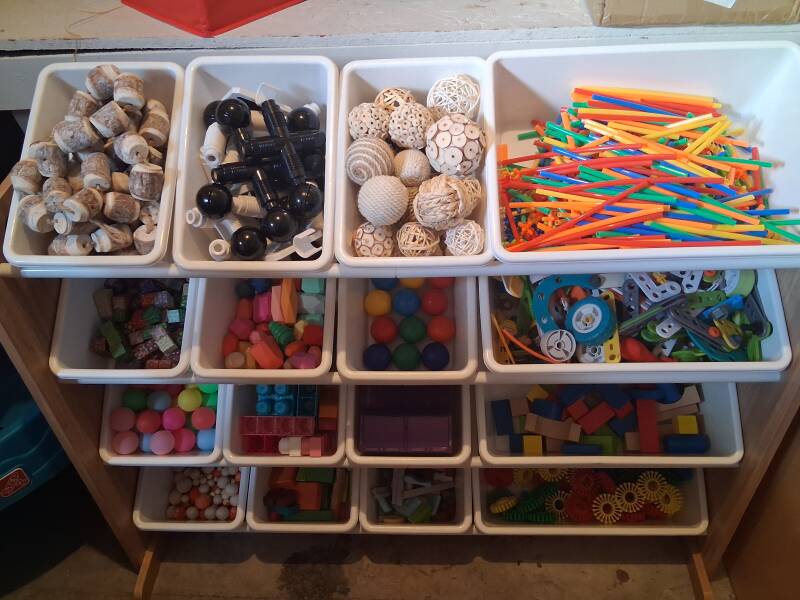
The Value of Loose Parts in the Early Childhood Classroom
At Discovery Kids, we believe children learn best through meaningful, hands-on experiences that honor their curiosity, creativity, and natural ways of exploring the world. One of the most powerful tools we use to support this philosophy is loose parts—open-ended materials that can be moved, combined, redesigned, and reimagined in countless ways. Natural objects, recycled materials, and everyday items become invitations for learning rather than objects with a single prescribed purpose.
Supporting Creative Expression
Loose parts play allows children to express ideas, emotions, and stories in ways that feel authentic to them. Without a predetermined outcome, children are free to imagine and create based on their own interests and experiences. A handful of sticks may become letters, pathways, or characters in a story. Fabric might transform into costumes, shelters, or landscapes for dramatic play.
In our program, we view creativity not as an extra, but as a core component of development. Loose parts honor the many “languages” children use to communicate thinking—through building, movement, storytelling, and art. Children learn to trust their ideas, take risks, and problem-solve as they bring their visions to life.
Enriching Sensory Experiences
Young children learn through their senses, and loose parts naturally provide rich sensory input. Children explore textures, weights, temperatures, sounds, and resistance as they handle wood, stone, sand, metal, fabric, and other varied materials. These experiences support brain development, coordination, and body awareness.
For many children, especially those developing self-regulation skills, sensory-rich play can be calming and organizing. At Discovery Kids, we intentionally offer materials that invite slow, focused engagement, allowing children to ground themselves, regulate emotions, and build confidence through hands-on exploration.
Encouraging Naturalistic Exploration
Loose parts often come directly from nature or reflect natural forms, making them a meaningful way for children to connect with the environment. Leaves, rocks, pinecones, water, and soil invite children to observe, compare, sort, and experiment. Through this process, children engage in early scientific thinking—asking questions, testing ideas, and learning through direct experience.
By working with natural materials, children also develop respect and appreciation for the world around them. They learn that learning does not require flashy or electronic toys, but can emerge from simple, beautiful materials that reflect the rhythms of nature and everyday life.
Building Social-Emotional Skills
Loose parts play naturally supports social-emotional growth. Because materials are shared and outcomes are open-ended, children practice collaboration, communication, and flexibility. They learn to negotiate roles, listen to peers, manage frustration, and work through challenges together.
At Discovery Kids, educators intentionally support this process by modeling respectful interactions, offering language for emotions, and guiding children through conflict resolution when needed. The goal is not perfection, but resilience—helping children develop confidence in themselves and trust in their relationships with others.
The Role of the Educator
In a loose parts–rich environment, educators act as observers, facilitators, and partners in learning. Rather than directing play, we thoughtfully prepare the environment, observe children’s interests, and gently extend their thinking with open-ended questions and responsive support. This approach reflects our belief that children are capable, competent learners who deserve trust and respect.
Loose parts are a foundational element of our play-based, child-centered approach at Discovery Kids. By supporting creative expression, sensory enrichment, naturalistic exploration, and social-emotional engagement, these materials nurture the whole child. Through loose parts play, our classrooms become spaces of wonder—where children feel safe to explore, confident to create, and deeply connected to themselves, others, and the world around them.